Stories My Grandparents Told Us
Updated: Sep 15, 2025
“So you’ll know where you come from.”
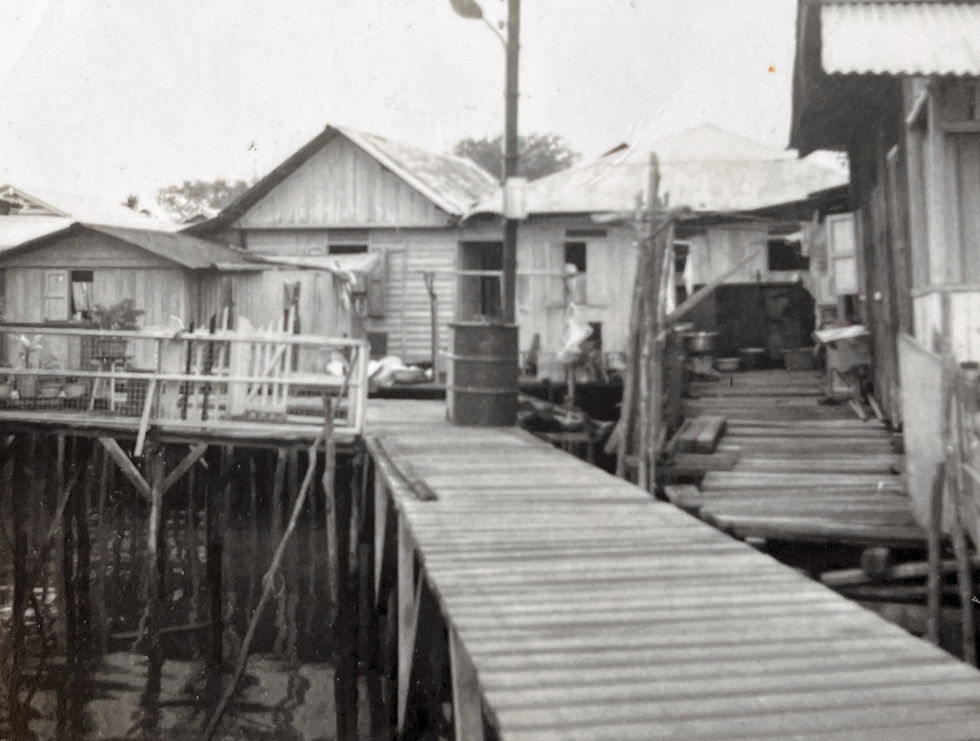
When we were children growing up in the flats, my grandmother — Nenek, in Malay — used to tell us stories after dinner. We’d sit on the floor in the living room by the door, where the tiles were cool and, if the wind was right, you could still feel a breeze that smelled faintly of the sea. She had been resettled from Pulau Brani decades earlier, but Brani never left her. She missed the island. You could hear it in the way she described the morning tides, the sound of boats knocking against the jetty, the smell of smoked fish on banana leaves. But she didn’t just tell us about Brani. She told us about women — fierce, clever, heartbroken, brave.
She never told us their names. We think she didn’t know them, and perhaps didn’t need to. She told their stories the way you pass on recipes — from memory, from feeling, from truth. It was only later, when we were older, that we realized these women were real. That one had been an admiral. Another, a queen. One had built a mosque with her own hands. One had defied empires.
Nenek told us these stories to give us something more than nostalgia. She told them to make sure we knew where we came from. So that when the world pushed us down, we could say — someone before me stood up. So I can too, decades later, wherever I am in the world.
And then there was Tok.
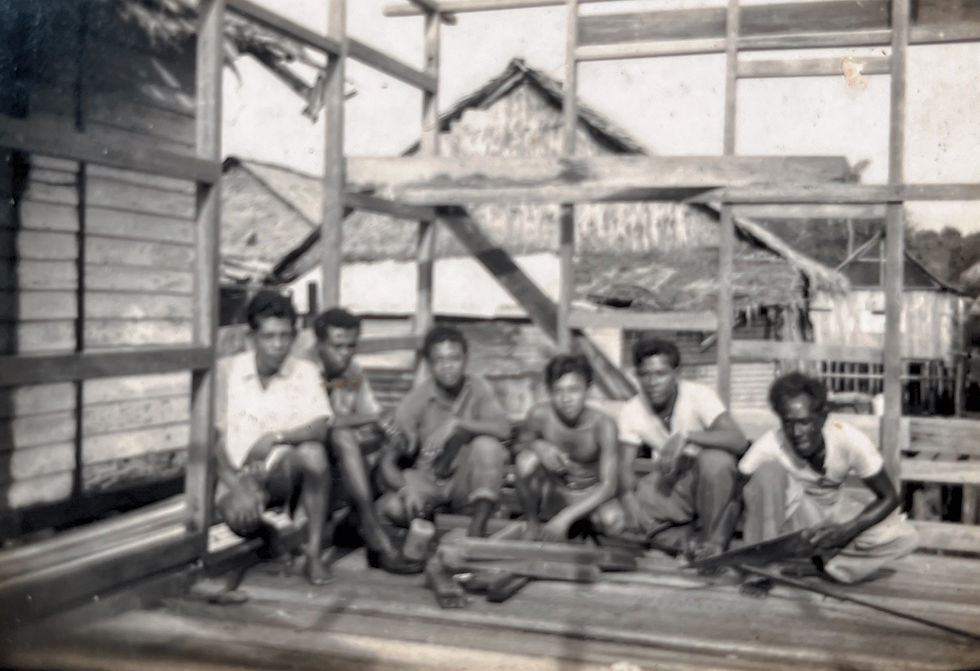
Tok told stories too, but in a different key. His were full of riddles, metaphors, and creatures who could shift shape or trick kings. He used allegory the way a carpenter uses fine tools — not to decorate, but to craft understanding. His stories were how he taught us about people: their pride, their fear, their foolishness, their grace. He taught us to pay attention to the world — to how water flows, how birds move before a storm, how someone’s silence says more than their words. He told stories not just to pass the time, but to sharpen our instincts. To remind us that wit was a kind of wisdom, and that knowing when to speak — or stay silent — was its own kind of power.
Between them, Nenek and Tok handed us a world stitched from story, full of women who fought, men who observed, and children like us who were meant to carry those stories forward. Not for sentiment. But for survival, for strength, and for strategy.
So that we, too, would know how to move through the world — with courage, with cleverness, and with our eyes open.

The Widow Admiral
“She lost her husband to war,” Nenek would say softly. “So she took his place on the ship.”
She never said her name. Just that this woman gathered the widows — wives of fallen sailors and soldiers — and trained them to fight. Not on land. At sea. They wore black, sailed warships, and moved like thunder.
One day, a foreign captain insulted their Sultan. So this widow boarded his ship, fought him herself, and cut him down with her blade. “She didn’t cry,” Nenek said, “She didn’t beg. She led.”
Years later, we found her name in a dusty book: Admiral Keumalahayati. The world’s first female admiral. But we already knew her — not by name, but by what she stood for.

The Sea Queen of Jepara
“She mourned in silence,” Nenek said once, folding laundry. “Shaved her head, wore white, and went into the hills. But when she came down, she was ready to fight.”
This woman, my Nenek said, had lost her husband to murder. And instead of hiding, she built ships. Sent them to fight colonizers across the sea. Not once, but twice.
“She didn’t win every time. But even the enemies wrote about her. Called her brave. Called her rich. Called her trouble.”
We only learned much later, in my college Southeast Asian history class, that her name was Queen Ratu Kalinyamat, and that she had sent 40 ships from Jepara to attack Portuguese Malacca. But in my Nenek’s stories, she was simply: the widow who became a queen, and didn’t back down.
The Woman Who Built a Mosque
“She was a trader,” Nenek would say when we passed Beach Road. “Married a Bugis prince. Ran a business. And when her house was burned down, twice, she didn’t run. She didn’t hide.”
“She built a mosque instead.”
We’d stop and stare at the leaning minaret, the whitewashed walls. Nenek would whisper: “That mosque? That was her gift. Her gratitude. Her answer to the people who tried to kill her.”
We didn’t know her name for years. But one day, we saw it carved on the side: Masjid Hajjah Fatimah.
We looked at Nenek then — and realised the stories she carried were also inscribed in stone.

The Queen Who Held the Crown
“They tried to make her give them the crown,” Nenek said one night, as thunder rolled in from the south. “But she held the keys. They needed her permission. And she refused.”
This woman, she told us, was a queen consort. When her husband died, the kingdom was torn — two sons, two factions, foreign powers everywhere. The Dutch on one side. The British on the other.
“They came to her with gold. With soldiers. With smooth words. She told them all: no.”
In the end, they took the regalia by force. But they never took her honour. She went down in silence, but never in surrender.
Her name, we later found out, was Engku Puteri Raja Hamidah. But by then, we already knew her. She was the woman who held the kingdom in her refusal.
Glossary of Names and Places
Pulau Brani
An island south of Singapore, once home to Malay kampung communities, maritime workers, and British naval facilities. Residents were resettled in the 1970s. “Brani” means “brave” in Malay.
HDB Flats
Public housing apartments built by Singapore’s Housing Development Board. Where most Singaporeans live today.
Admiral Keumalahayati (Laksamana Malahayati)
A 16th-century Acehnese naval commander and the world’s first recorded female admiral. She led an all-widow fleet and killed Dutch commander Cornelis de Houtman in battle.
Ratu Kalinyamat
A 16th-century queen of Jepara, Java. After her husband’s assassination, she launched major naval attacks against Portuguese Malacca, commanding one of the largest fleets of her time.
Hajjah Fatimah binte Sulaiman
A Malay trader from Malacca who became a business leader in early colonial Singapore. After surviving two attacks on her home, she built Masjid Hajjah Fatimah — one of Singapore’s oldest mosques.
Engku Puteri Raja Hamidah
A queen consort of the Johor-Riau Sultanate in the early 19th century. She withheld the royal regalia from colonial powers, delaying succession and refusing to legitimize foreign interference.
Jepara
A port city on the northern coast of Java, known for shipbuilding and wood carving. Ratu Kalinyamat ruled from here.
Malacca (Melaka)
A historic port city on the west coast of Malaysia. Conquered by the Portuguese in 1511, it was central to spice trade and regional power struggles.
Penyengat Island
A small island near Bintan, Indonesia. Served as the royal seat of the Riau-Lingga Sultanate. Home to Engku Puteri’s court and a centre of Malay-Islamic culture.
Masjid Hajjah Fatimah
A mosque on Beach Road, Singapore. Built in 1846 with funds and land donated by Hajjah Fatimah. Its minaret leans slightly, giving it the nickname “Singapore’s Pisa”.