Currents of Connection: Migration, Mobility, and Stewardship in the Maritime World
Editorial Introduction

The history of Southeast Asia cannot be understood from the land alone.
For centuries, the seas surrounding the Malay Peninsula, the Riau Archipelago, and the Indonesian islands formed one of the most dynamic maritime systems in the world. Long before modern borders, these waters connected communities through trade, migration, knowledge exchange, and shared environmental stewardship.
This three-essay series explores that maritime world through the lens of Pulau Brani and Singapore’s southern coast.
The first essay reflects on conservation, asking what it means to preserve places that were historically embedded within a much wider regional network of navigation, commerce, and ecological knowledge. The second essay examines migration as a foundational force in maritime Southeast Asia, where mobility shaped societies, economies, and systems of knowledge. The third essay considers mobility as infrastructure, drawing connections between the historical movement of people and ideas across seas and the modern innovation ecosystems that underpin global finance and digital commerce.
Together, these essays argue for a broader understanding of maritime heritage. The islands and waters surrounding Singapore are not only sites of national development. They are part of a shared regional story—one that links the past of the Nusantara maritime world with contemporary questions of stewardship, mobility, and innovation.
Pulau Brani offers a particularly compelling vantage point from which to explore these themes. Situated at the gateway of the Singapore Strait, the island once formed part of a vibrant maritime corridor that connected traders, navigators, and island communities across Southeast Asia.
As Singapore now reshapes its southern coastline through the Greater Southern Waterfront, this moment offers an opportunity not only for urban transformation, but for historical reflection.
To conserve such places is not merely to preserve land or structures. It is to remember the systems of exchange and knowledge that once flowed through them, and to ensure that their legacy continues to inform how we shape the shores of the future.
Essay I: Conservation at the Edge of the Sea
Pulau Brani, the Greater Southern Waterfront, and the Maritime Commons
Epigraph
“The sea is the oldest commons humanity has known.”
Recent parliamentary discussions in Singapore have revisited an enduring question of development: how a city balances growth with stewardship of the natural and historical landscapes entrusted to it. Minister of State for National Development Alvin Tan noted in Parliament that Singapore must continually navigate this balance, ensuring that development proceeds alongside the safeguarding of biodiversity and environmental integrity.[1]

These reflections arrive at a particularly consequential moment. Singapore is beginning to reshape its southern coastline through the development of the Greater Southern Waterfront, one of the most ambitious urban transformations in the country’s modern history. As port operations gradually relocate to Tuas, a thirty-kilometre stretch of coastline from Marina Bay to Pasir Panjang will be reimagined for future generations.[2]
Within this evolving landscape sits Pulau Brani, an island whose significance extends far beyond contemporary urban planning.
To understand what conservation means here requires stepping back into the deeper maritime history of Southeast Asia. For much of recorded history, the seas surrounding Singapore were not borders separating territories. They were connective corridors linking the societies of the Malay Peninsula, the Riau Archipelago, Java, Borneo, and beyond.
Historians have often described this interconnected maritime region as the Nusantara—a vast network of islands and trading societies bound together by seasonal winds, navigational knowledge, and shared economic rhythms.[3]
Within this world, the Singapore Strait functioned as one of the most important maritime passages in Asia.
Ships carrying spices, ceramics, textiles, metals, and agricultural products passed through these waters for centuries. Arab merchants, Chinese traders, Indian financiers, Bugis navigators, and Malay sailors all moved through the strait, contributing to a complex web of economic and cultural exchange.
Pulau Brani formed part of this maritime system.
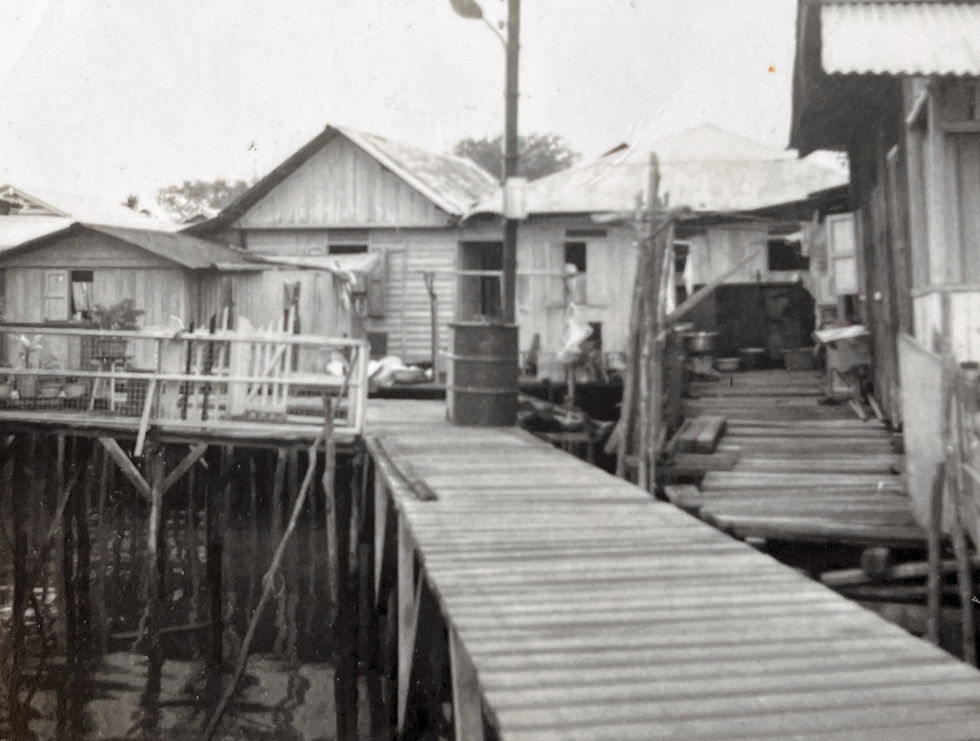
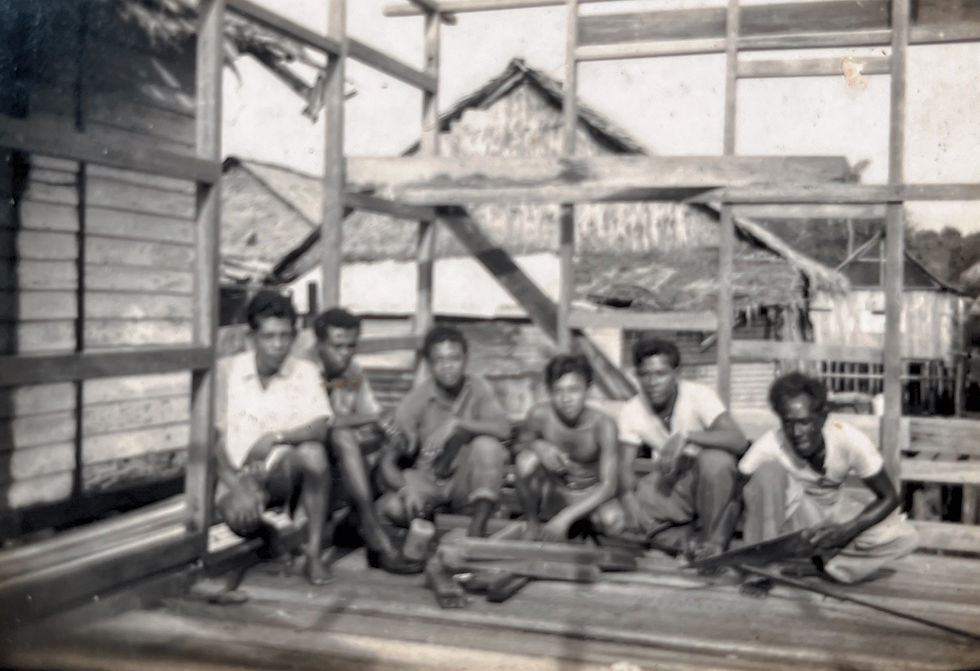
Before the island became associated with modern port infrastructure, it was home to communities such as the Orang Pulau and Orang Laut—maritime peoples whose lives were deeply intertwined with the sea. Their settlements often stood on stilts above tidal waters, positioned strategically along navigation routes. Their knowledge of reefs, currents, and seasonal winds enabled ships to pass safely through one of the busiest waterways in the world.

This knowledge represented more than practical skill. It constituted a sophisticated form of maritime science.
Navigation across the archipelagic seas required careful observation of stars, currents, wind patterns, and tidal cycles. Generations of sailors and fishermen accumulated empirical knowledge that allowed them to travel vast distances with remarkable precision. Such expertise was essential to the functioning of early trading networks and contributed directly to the rise of regional maritime powers such as Srivijaya and later Melaka.[4]
Shipbuilding itself reflected similar scientific ingenuity. Southeast Asian vessels—such as the large Malay jong or the Bugis pinisi—were engineered for long-distance voyages across monsoon seas. Their hull designs and sail configurations allowed them to transport substantial cargo while navigating complex coastal waters.[5]
Trade routes in turn served as conduits for the exchange of knowledge.
Ports across Southeast Asia became meeting points for merchants, scholars, craftsmen, and sailors. Languages mixed, legal traditions evolved, and commercial practices adapted across cultures. Early financial instruments—credit arrangements, partnership structures, and trust-based merchant networks—emerged from these interactions.[6]
Migration was not an exception within this maritime world.
It was its foundation.
Communities throughout the Nusantara were shaped by constant movement across seas. Families traced their origins across multiple islands; traders settled in distant ports; sailors married into local communities. The resulting societies were inherently plural, integrating diverse cultural and linguistic traditions.
Temasek and the Early Maritime Port
Long before Singapore became a modern port city, the island—then known as Temasek—occupied a strategic position within the maritime trade routes of Southeast Asia.
Fourteenth-century records, including the Chinese traveller Wang Dayuan’s account Daoyi Zhilüe, describe Temasek as an active trading settlement where merchants from across the region gathered to exchange goods and provisions.[7]
Archaeological discoveries in Singapore—including Chinese ceramics, glass beads, and trade wares from the Middle East and Southeast Asia—confirm that the island participated in vibrant commercial networks linking the Indian Ocean and the South China Sea.[8]
Temasek’s importance lay not in territorial size but in location. Positioned along the narrow passage of the Singapore Strait, the island offered sheltered anchorage for ships navigating between the Malay Peninsula and the Indonesian archipelago.
Traders carrying spices from the Moluccas, textiles from India, ceramics from China, and forest products from the Malay world passed through these waters. As historian O.W. Wolters observed, such ports functioned less as isolated cities than as nodal points within a wider maritime system of exchange.[9]
The communities inhabiting the southern islands—including Pulau Brani—were therefore embedded within these networks of circulation.
Understanding Temasek in this way reminds us that Singapore’s maritime story did not begin with colonial port development in the nineteenth century. It forms part of a much longer history of navigation, migration, and exchange that shaped the Nusantara world.
Maritime Knowledge and Modern Innovation
Reflecting on these histories also reveals a striking continuity between past and present.
The maritime world of Southeast Asia functioned through systems of interoperability, trust, and shared standards that allowed diverse communities to collaborate across distances and cultures. Navigation required common understandings of wind systems and sea routes; trade depended on mutual recognition of commercial practices and partnership structures.
Modern innovation ecosystems operate in remarkably similar ways.
Today’s digital economies—particularly in areas such as fintech, payments, and cross-border commerce—rely on the movement of knowledge, talent, and ideas across jurisdictions. Just as maritime routes once enabled the circulation of goods and expertise, digital networks now facilitate the exchange of data, capital, and technological capability.
Seen in this light, the historical maritime systems of Southeast Asia can be understood not only as trade networks, but also as early innovation ecosystems—spaces where mobility and exchange produced new forms of knowledge, economic organization, and institutional learning.
Remembering these precedents enriches how we think about both conservation and development today.
A Reflection on Stewardship
Understanding this broader context shifts how we think about conservation.
Conservation cannot simply mean preserving physical structures or landscapes within national borders. It must also acknowledge the historical systems of exchange and knowledge that connected places like Pulau Brani to a much larger regional maritime world.
In this sense, conservation becomes an unfolding process rather than a static act.
It involves documenting maritime knowledge traditions, recovering the histories of sea peoples, and situating local sites within the wider networks that once sustained them.
The Greater Southern Waterfront provides precisely such an opportunity.
As Singapore reshapes its southern coastline, the redevelopment of this area offers more than economic renewal. It presents a chance to interpret and communicate the deeper maritime histories embedded within these waters.
Pulau Brani can serve as a focal point for this effort—a place where the story of Southeast Asia’s maritime world is remembered and shared.

To care for Pulau Brani today is therefore not simply to conserve an island.
It is to recognise that the seas surrounding Singapore once formed part of one of the world’s great maritime systems—a network that connected communities across Southeast Asia through trade, migration, and shared stewardship.
By acknowledging this inheritance, Singapore has an opportunity not only to preserve local heritage, but to honour the wider maritime history that shaped the region.
And in doing so, it ensures that the transformation of the Greater Southern Waterfront carries forward not only economic ambition, but also an enduring respect for the currents of knowledge, exchange, and movement that once defined these shores.
And our very proud place within it, as Singaporeans.
References
[1]: Alvin Tan, Parliamentary remarks on balancing development with environmental stewardship (Singapore Parliament).
[2]: Urban Redevelopment Authority, Greater Southern Waterfront Master Plan.
[3]: Anthony Reid, Southeast Asia in the Age of Commerce, 1450–1680.
[4]: Timothy Barnard, The Orang Laut and the Malay Maritime World.
[5]: Pierre-Yves Manguin, “The Southeast Asian Ship.”
[6]: Janet Abu-Lughod, Before European Hegemony.
[7]: Wang Dayuan, Daoyi Zhilüe (14th century).
[8]: National Heritage Board, Singapore Archaeological Findings.
[9]: O.W. Wolters, Early Indonesian Commerce.