Thoughts on the National Day Rally plans for Brani
We should welcome the future. But our history doesn't begin from a blank map.
I am genuinely excited that Pulau Brani will become accessible to Singaporeans again — that the island will begin a new chapter after the port. For those of us whose families once called Brani home, there is something extraordinary about imagining Singaporeans walking its shores again after decades behind fences and cranes.
Development has always been part of Brani's story. The island has been home, maritime landscape, industrial site, and working port, each generation leaving another layer upon the last. But precisely because the transformation ahead will be so significant, we have a once-in-a-generation opportunity to ensure we do not approach Brani as a blank slate.
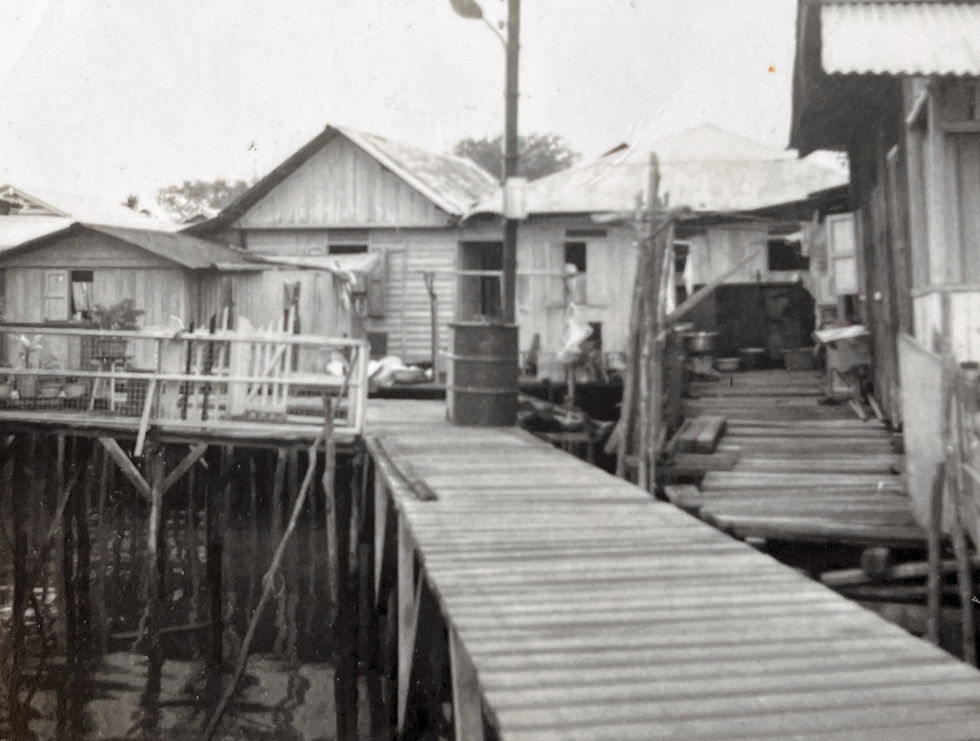
Pulau Brani was never simply land adjacent to Sentosa awaiting its next use. There was already a world here.
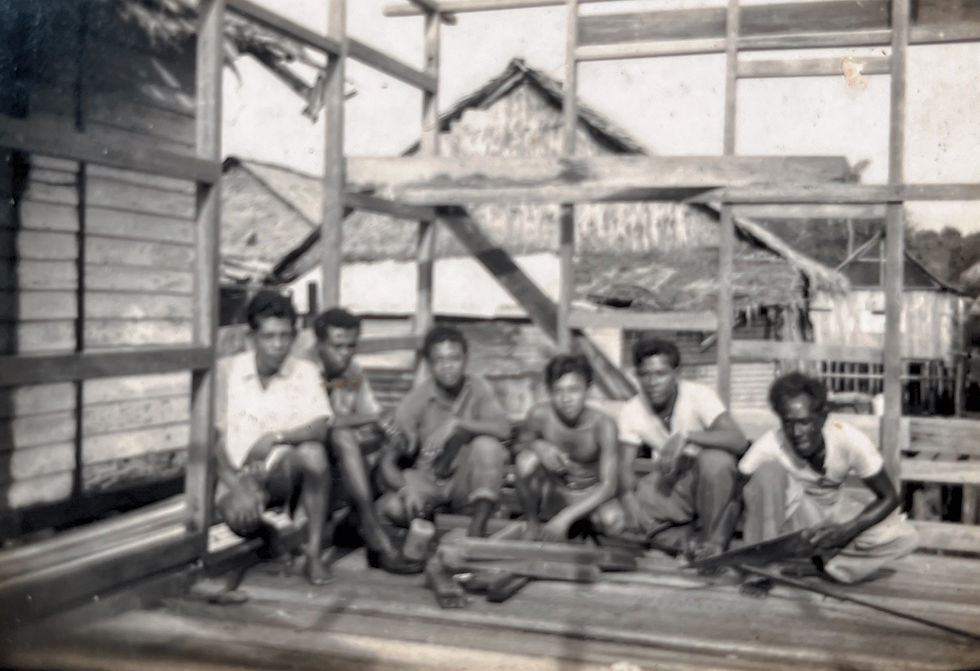
Generations of Singaporeans lived, worked, worshipped, swam, fished, celebrated weddings, and raised families on this island. It has its own maritime, community, and industrial history; its own place names and pathways; its own relationships with the surrounding waters, neighbouring islands, and the wider Singapore coastline.
For me, the aspiration therefore goes beyond commemorating Pulau Brani. It is about making its history legible.
Commemoration tells us that something happened here. Legibility allows us to understand the landscape differently because we know it did.
Could someone walking through a transformed Brani understand where communities once lived? Could an old shoreline remain perceptible even where the coast has changed? Could historic paths, jetties, kampung names, and gathering places leave traces in the new landscape? Could you stand somewhere and hear the voice of someone describing what it was like to grow up in precisely that spot? Could the names people actually used for places find their way onto future maps? And perhaps most importantly: could a child who has no connection to Pulau Brani arrive decades from now and still understand that this was once somebody else's world?
This is why heritage needs to sit upstream of planning, rather than being added later as interpretation.
Oral histories, former islanders' knowledge, historic maps, place names, archaeology, and cultural practices are not simply content for a future heritage trail. They are forms of knowledge about the landscape itself. Captured early enough, they can inform paths, public spaces, names, architecture, and even the ways people encounter the water.
There is an urgency to this that is fundamentally intergenerational. The generation that remembers Pulau Brani as a lived place is getting older. Their children and grandchildren inherit pieces of that world — stories, photographs, words, recipes, memories repeated around family tables. The generation after them may inherit even less, unless we deliberately create the means by which that knowledge can travel forward.
The task is not simply to preserve memories. It is to build the infrastructure through which memory moves between generations.
That also means thinking differently about participation. Former islanders and their descendants are not subjects to be consulted about a history someone else has already written. They are knowledge holders — and they should be part of the process of co-creating Brani's next chapter. Not as an afterthought once plans are drawn, but as participants whose knowledge of the island's human geography shapes what gets built: where paths run, what places are called, how the water is encountered, where memory is made visible.
They can help reconstruct what conventional maps cannot capture: where children played, where families gathered, which stretches of water mattered, what places were called, which routes people took, where communities overlapped, and how people understood the island they called home.
And then comes the more exciting question: what do we do with that knowledge? Perhaps old pathways can inform new ones. Perhaps historic place names can live again in street signs and public squares. Perhaps digital layers can allow visitors to see earlier coastlines and settlements beneath the contemporary landscape. Perhaps oral histories can be encountered in the places where those memories actually happened. Perhaps future generations can continue adding their own stories — so that Brani's history does not stop at the moment we decide to "preserve" it.
Because an island is not a museum object. Its story should continue accumulating.
I do not think the choice is between heritage and development. The more ambitious possibility is to make Pulau Brani an example of how Singapore can develop through its history rather than over it.
The Prime Minister spoke about stewardship across generations: how previous generations created possibilities for us, and how we must create possibilities for those who come after. Heritage belongs within that idea of stewardship. Intergenerational stewardship is not only about asking: What kind of Singapore will we leave them?It is also about asking: What will they be able to understand about the Singapore that came before them?
We are accomplished builders of physical infrastructure across generations — land, housing, transport, institutions. Perhaps places like Pulau Brani invite us to think about memory as intergenerational infrastructure too: the maps, stories, names, knowledge, and relationships that allow one generation to make a place intelligible to the next.
That is what I would love for Pulau Brani.
Not a landscape frozen in time. Not a reconstructed kampung behind glass. And not a spectacular new destination with history appended afterwards as signage.
But a living place in which past, present, and future remain visible to one another — shaped, in part, by the people who knew it first.
So that decades from now, a child walking through a transformed Pulau Brani does not simply encounter a plaque saying that people once lived here.
They can look around them — and read the landscape.
People lived here. This was their world. Their world helped make ours. And we chose to carry something of it forward.