The Swordfish and the Southern Islands: A Tale of Hang Nadim
Updated: Jun 26, 2025
In the days when the sea was still a road and not a border, when islands ringed the southern coast of Singapore like scattered emeralds on silk, there was a time of terror.
It began quietly—just stories carried across the water from fishermen returning empty-handed from the Straits. Then the sea changed. It grew too still, then too fast. And one morning, as the mist lifted off the waters between Pulau Brani and the southern shoreline of Temasek, they came.
Swordfish.
Sharp-beaked and silver-scaled, their bodies shimmered like blades in the sun. They tore through the tide in swarms—screeching through fishing nets, shattering canoes, impaling men with horrifying precision. A dozen died on the first day alone.

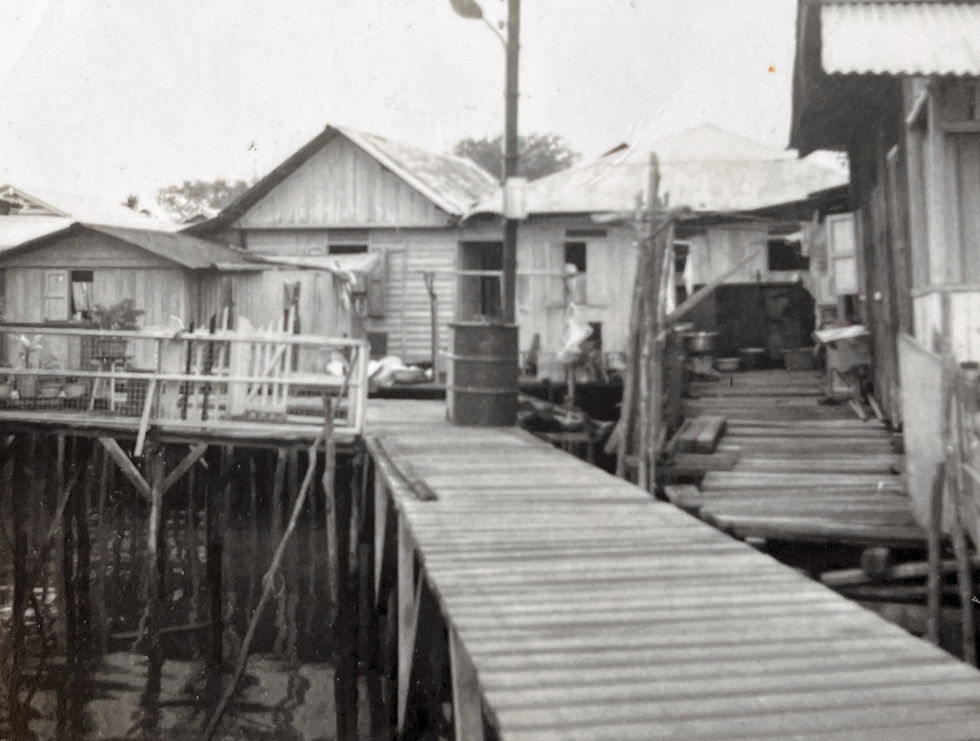
On Pulau Brani, where the jetty jutted out like a finger of faith into the sea, kampung women screamed as their sons didn’t return. Smoke no longer rose from charcoal stoves. Boats rocked gently, tied and unused. Even the seabirds grew silent.
The Sultan’s men tried to fight the fish with spears and shields, but the creatures were too swift, too many. Each dawn brought new corpses and more blood staining the tide. From Kusu to St. John’s, Lazarus to Semakau, fear rippled like current.
Then, from the northern bank of the Brani River, where a narrow titi bridge led to the village gardens, a boy stepped forward.
He was no more than ten, dressed in a simple sarong, a wooden toy dagger tucked in his waistband. His name was Hang Nadim. The kampung knew him as a bright child—curious, quiet, always listening. But now, he spoke with unexpected authority.
“Don’t meet the swordfish at sea,” he said, standing before the council at the village balai. “Line the shores with banana tree trunks. Let them leap. Let them skewer themselves.”
The men exchanged glances. The elders laughed uneasily. But they were desperate—and the Sultan, having exhausted his own ideas, agreed.
And so the people laboured. From Brani’s groves and beyond, they dragged the banana trunks—soft, thick, wet with sap—and lined the coast. The southern shoreline transformed: not into a fortress of stone, but of nature and wits.

At first light, the sea gleamed with menace. The swordfish returned, dancing with fury. They leapt, and they struck—one by one, their beaks lodged in banana bark. Stuck. Trapped. Killed.
By midday, the tide was red and still. The attack was over. A boy had outwitted the sea.
A great cheer rose across the islands. Bonfires were lit on the beach at Brani. Mothers wept. Fishermen sang old sea chants that hadn’t been heard in months. And Hang Nadim was summoned to the Sultan’s palace on the mainland—his name spoken in reverence.
But shadows fall differently in palaces than they do on kampung sand.
The Sultan, once grateful, now felt uneasy. His advisors leaned in and whispered: If a boy can defeat the sea, what might he do next? If the people follow his mind, what power do you hold?
And so, under moonlight, a royal order was issued.
Some say they took him by night, just before the cock crowed. That he cried not for help, but for the sea to remember him. Some say he was tied to a rock near Lazarus Island and left for the tide to claim. Others believe he was brought back to Brani—buried beneath the flame trees, where the earth dips gently toward the sea.
No grave bears his name. But the island remembers.

On quiet nights on Pulau Brani, when the air is thick with salt and the sea laps gently at the mangrove roots, old men claim to hear the slap of bare feet on the jetty. Fishermen say that during storms, banana leaves sometimes appear on the waves—fresh, green, untouched by wind or salt.
Children growing up on the southern islands still know his name. They speak it before crossing bridges, before dipping their toes into the water. “He watches,” they say. “Hang Nadim watches the sea, so it never turns on us again.”
His story is not just one of cleverness and tragedy. It is a memory sewn into the soil of the southern islands. It lives in the ghostly glimmer of fireflies near Brani’s mangroves. In the deep bell of a conch shell held to the ear. In the silence that falls when banana trees sway for no reason.
Hang Nadim was not just a boy.
He was the child of a seafaring people. A mind ahead of its time. A soul sacrificed to fear.
And the sea has never forgotten him.