Women of the Southern Islands
Feminism, Labour, and the Hidden Architectures of Maritime Life
Epigraph
“The sea remembers the names that history forgets.”
Conceptual Framing
While a lot has been said about maritime commons and conservation, too little is written about the people who sustain the world—particularly the women whose labour, emotional stewardship, ecological knowledge, and economic participation formed the hidden architecture of island life.
This essay will position Pulau Brani not as an isolated case, but as part of a broader constellation of Singapore’s southern islands: Pulau Bukom, Pulau Seking, Pulau Hantu, Pulau Sudong, Pulau Semakau, and the wider maritime settlements connected through kinship, fishing, trade, and movement across the Nusantara seas.
The central argument is that women in these maritime communities occupied far more complex and dynamic roles than conventional histories often acknowledge.
They were much more than passive inhabitants of kampong life, but active participants in economic systems, custodians of social continuity, transmitters of ecological and cultural knowledge, and, in many respects, early practitioners of localized and relational forms of feminism.
This feminism did not always emerge through formal political language. Instead, it was embedded within everyday acts of survival, negotiation, labour, and care.
Lost Worlds, Lost Women
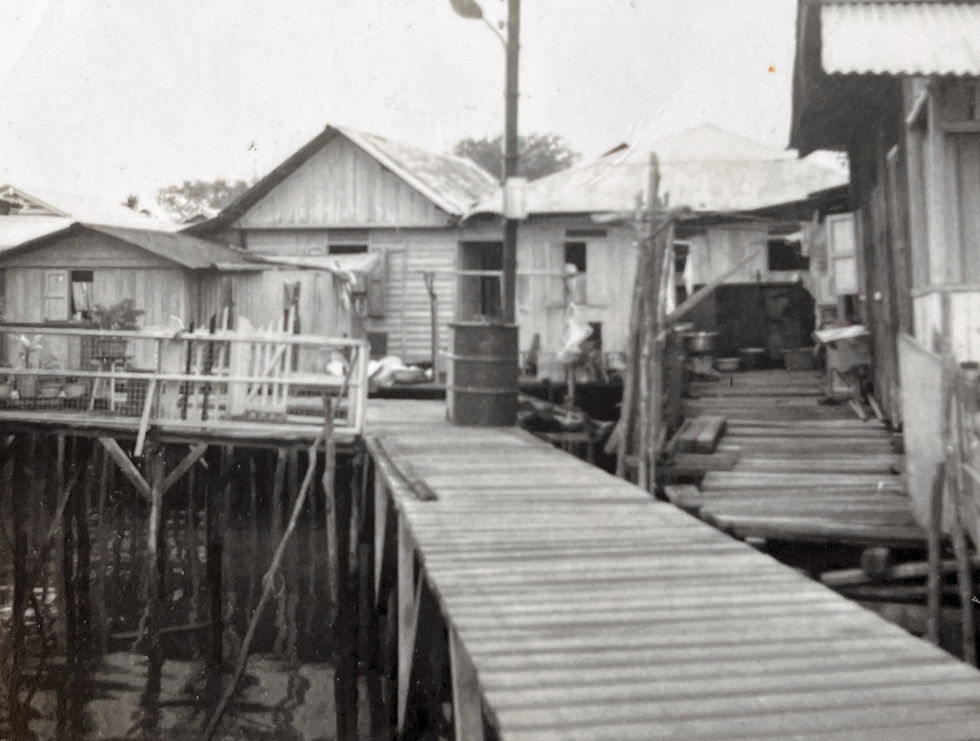
The histories of Singapore’s southern islands are often told through the language of ports, trade, reclamation, and development. They are narrated through maps, shipping routes, industrial expansion, and state-building. Yet beneath these larger narratives existed quieter systems that sustained maritime life across generations.
Women stood at the centre of these systems.
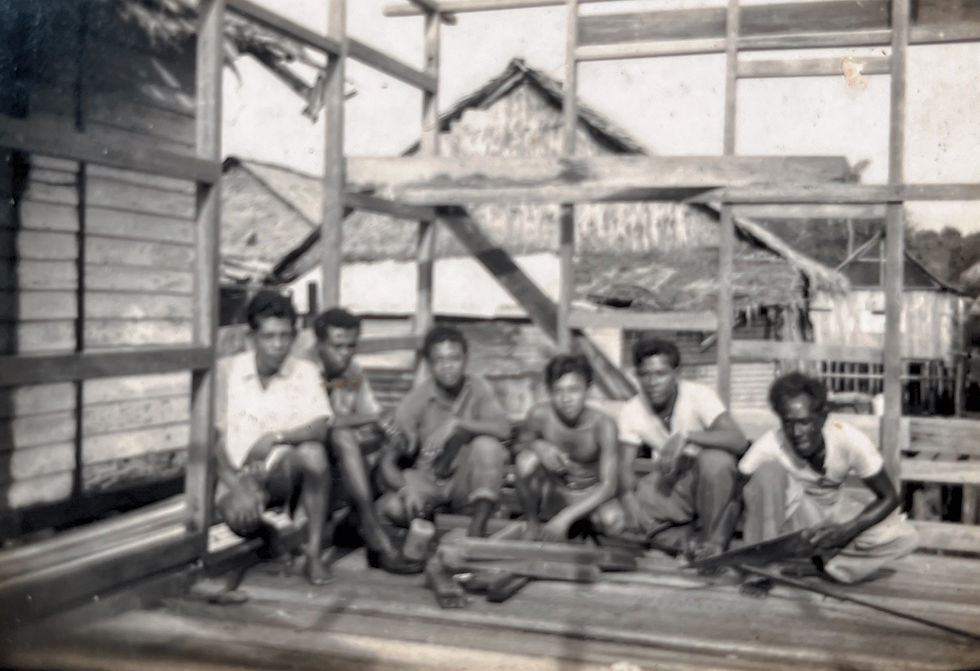
On islands such as Pulau Brani, Pulau Bukom, Pulau Seking, Pulau Sudong, and the wider constellation of Singapore’s southern islands, women shaped the rhythms of everyday life in ways that were inseparable from the maritime economy itself. They processed fish catches, traded goods, maintained kinship networks across islands, raised children in densely interconnected kampong communities, preserved recipes and medicinal knowledge, and carried oral histories across generations.
Their labour was foundational to the economies and societies of these islands. To reflect on the women of Pulau Brani today is therefore not merely to recover overlooked stories. It is to reconsider the intellectual and social foundations of the maritime world that shaped Singapore and the wider Nusantara.
Maritime Women and Economic Life

Much of maritime Southeast Asia historically operated through systems of exchange that depended not only on sailors and traders, but on complex household economies sustained by women.
Historian Anthony Reid has written extensively about the comparatively visible economic roles women occupied across Southeast Asian societies, particularly in port cities and trading communities.[^1] In many parts of the Malay world, women participated actively in markets, managed household finances, and operated small-scale trade networks. Coastal and island economies depended on this labour.
On the southern islands, women cleaned and salted fish, sold produce and prepared foods, managed supplies for seafaring family members, and coordinated reciprocal support systems among neighbours and relatives. Their work extended beyond domesticity into logistics, informal finance, and economic continuity.
Maritime life was inherently uncertain. Fishing yields fluctuated with monsoon conditions and tidal cycles; storms disrupted movement and income. Women frequently acted as stabilizing forces within these volatile environments, ensuring households and communities could endure periods of scarcity and transition.
In this sense, the maritime household was not organized around rigid separations between productive and reproductive labour. It functioned collaboratively. Men navigated seas and fishing routes; women maintained the social and economic infrastructures that made such mobility possible.
The Southern Islands as Integrated Communities
The southern islands were never isolated settlements.
They formed an interconnected maritime ecosystem linked through kinship, trade, marriage, labour, and shared religious life. Families often moved fluidly between islands and coastal settlements across Singapore, Johor, and the Riau Archipelago. Social relationships were shaped less by fixed territorial boundaries than by navigational proximity and maritime familiarity.
Within these communities, women often served as custodians of continuity.
They organized communal cooking during festivals and funerals, cared collectively for children, transmitted oral histories and songs, and maintained social ties across extended networks of relatives spread throughout the islands. Their labour created cohesion within communities shaped by movement.
This fluidity challenges contemporary assumptions about borders and identity.
For many maritime communities, belonging was relational rather than territorial. Identity emerged through networks of reciprocity, shared labour, and movement across seas. It was common for families to trace lineages across multiple islands and ethnic traditions. Malay, Bugis, Javanese, Arab, and Chinese influences frequently overlapped within daily life.
The women of the southern islands navigated these plural worlds with quiet sophistication. Multilingualism, cultural adaptation, and coexistence were not exceptional skills, but everyday realities.
Feminism Beyond Institutional Language
To describe these women solely through contemporary frameworks of feminism risks flattening the complexity of their lives. Many did not articulate their agency through formal political language or organized activism. Yet this does not mean they lacked influence or autonomy.
The women of the maritime world exercised forms of relational authority deeply embedded within community life.
They managed household economies, mediated disputes, sustained intergenerational knowledge systems, and ensured social continuity through periods of uncertainty and displacement. Their leadership often emerged through competence, resilience, and trust rather than formal titles.
Historian Barbara Watson Andaya has argued that Southeast Asian societies historically afforded women comparatively significant economic and social participation relative to many other premodern societies.[^2] While maritime communities were certainly not free from patriarchy or hierarchy, women nevertheless occupied active and visible roles within economic and communal life.
In many ways, the women of Pulau Brani and the southern islands practiced a form of everyday feminism grounded not in abstraction, but in continuity - Their labour ensured that communities survived.
Their care sustained social worlds that larger political and economic histories often overlook.
Women, Ecology, and Maritime Knowledge
The women of the southern islands also possessed forms of ecological intelligence that rarely appear in official histories.
They understood tidal rhythms, weather shifts, seasonal food cycles, and the medicinal properties of coastal plants. They knew how to preserve fish during periods of abundance, how to stretch limited resources during difficult seasons, and how to interpret environmental changes that affected community life.
This knowledge constituted a form of environmental stewardship developed through long-term observation and lived experience.
As Singapore and the wider region confront questions of sustainability, biodiversity, and coastal resilience, such histories take on renewed relevance. Maritime communities historically understood that survival depended on maintaining reciprocal relationships with the natural world.
Women played a central role in transmitting this knowledge.
The sciences of maritime life were therefore not confined to navigation or shipbuilding alone. They were also embedded in food systems, caregiving practices, ecological management, and communal adaptation.
Displacement and Memory
The redevelopment of Singapore’s southern islands transformed these communities profoundly. As industrialization, land reclamation, and port expansion accelerated in the twentieth century, many island residents were relocated to mainland housing estates. Communities shaped over generations by maritime rhythms were suddenly reorganized around urban infrastructures and land-based routines.
For many former islanders, the loss was not merely physical. It involved the fragmentation of social networks, the disappearance of shared communal spaces, and the gradual erosion of everyday maritime practices that had once structured life.
Women frequently became the custodians of these memories. Through recipes, stories, photographs, family rituals, and oral histories, they preserved fragments of island life after displacement. Their recollections now form some of the most important archives of Singapore’s southern island communities. Remembering these women therefore becomes essential not only to heritage preservation, but to understanding the emotional geography of development itself.
A Reflection on Continuity

As Singapore reshapes its southern coastline through the Greater Southern Waterfront, the histories of Pulau Brani and the southern islands invite a broader reflection on what conservation truly means.
To conserve maritime heritage is not only to preserve coastlines, artefacts, or architectural remnants. It is also to remember the people who sustained these worlds through labour, care, and knowledge.
The women of the southern islands were not peripheral figures within maritime history. They were among its central architects. Their labour sustained households, economies, and communities across generations. Their knowledge preserved continuity amid uncertainty. Their lives reveal that maritime history was never built by ships and trade alone, but also by the quieter infrastructures of caregiving, resilience, and human connection.
To honour these women today is therefore not simply to look backward.
It is to recognise that the future of conservation, development, and social resilience depends just as much on remembering how communities cared for one another as on how economies were built around them.
And as Singapore continues to reimagine its southern shores, these histories offer an opportunity not only for remembrance, but for perspective: a reminder that the maritime world which shaped this region was sustained as much by women’s invisible labour as by the visible movements of trade and empire.
Sources
Anthony Reid, Southeast Asia in the Age of Commerce
Barbara Watson Andaya, The Flaming Womb: Repositioning Women in Early Modern Southeast Asia
Jean Gelman Taylor, Indonesia: Peoples and Histories
National Archives of Singapore oral histories on the Southern Islands
National Library Board Singapore resources on Pulau Brani and the Southern Islands
Lily Kong & Brenda Yeoh writings on memory and displacement in Singapore
Oral histories from Orang Pulau and Southern Islands communities